What is happiness? What makes people happy? The answers to these questions are still heavily debated because it is still uncertain what conditions and interventions improve happiness or quality of life. On the 29th May 2012, I attended a talk at UCL on behalf of Dr Eyman, entitled ‘The Science of Happiness’.
It has been a minute since I last posted, please accept my apologies and thank you for sending messages asking for more. Your support is much appreciated. 🙂
Interestingly enough, this is the second time I have had to put things on hold due to a number of unforeseen circumstances and again the first thing I see being blasted all over standard newspapers and science blogs is a genetics story. Yaaaay. But only because it is so much easier for me to talk about my own specialty than anything else. I’m not biased at all LOL.
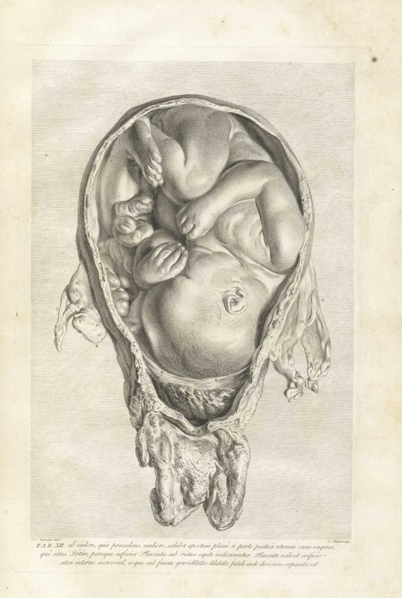
At the beginning of this month, Kitzman, J. O. et al. (2012) published work in the journal Science Translational Medicine that heralds a future in which a child’s genetic blueprint can be safely scanned for traits and defects long before birth by reconstructing the genome of a fetus using a blood sample from its mother and a saliva sample from its father. Before we all start screaming designer babies horrors, read the science and take a moment to take it all in. Then make your judgement.
Here comes the hardcore science bit:
I know some of you are thinking we know this is being done already right? Actually, originally, prenatal testing was conducted only to detect life-threatening disorders. Then, conditions such as Down’s Syndrome were added. Recently, British parents were given the go-ahead to test for cancer genes such as BRCA (this is important to note, as the cancer does not present itself until much later on in life). Furthermore, most prenatal diagnosis is done from a sample of either placental tissue or amniotic fluid, both of which must be obtained using invasive methods that can trigger miscarriage. Therefore, the fact that this much information can be obtained from a simple blood test and saliva is major in more ways than one.
So how is this possible? When a woman is pregnant, her blood contains fragments of DNA both from her genome and from that of her unborn child. Generally, around 13% of the DNA in her blood plasma — called ‘cell-free’ DNA — comes from the fetus. One of the biggest challenges facing scientist is telling the difference between fetal and maternal DNA (which is why invasive methods are required).
Step one: Jay Shendure, a geneticist at the University of Washington in Seattle, and his colleagues isolated 5 nanograms of cell-free DNA from a maternal blood sample taken at 18.5 weeks of gestation. They performed ‘deep sequencing’ on the DNA, which involved sampling fragments approximately 78 times. The researchers then went on to construct the mother’s genome by sequencing the DNA in her blood cells computationally using ratios to predict haplotypes and variants. Where the ratios diverged from what was known to be maternal (from a previous sample, before pregnancy), the reading was thought to be from the fetus genetic material. That sounds more complicated than it is.
Step two: Working out the fathers or paternal contribution. Here the researchers simply sequenced the father’s genome using DNA from his saliva (blood could also have been used but in this case was not available). Variants of his that didn’t turn up in the maternal blood were presumed not to have been inherited by the fetus; those that did were presumed to come from the fetus.
The third and most important step was to test the accuracy of the “constructed” genome. The researchers sequenced the child’s genome from cells collected from its cord blood after birth. Amazingly, they found out that they were able to predict inherited mutations using the parental samples reporting 98% accuracy. Furthermore, understanding that fetal screening needs to be done sooner to give parents time to respond, they then tested the technique on a second family with a 8.2 week-old fetus and obtained 95% accuracy (that’s half the amount of time as previous run). Job done.
As you can imagine the ethical bunnies are already jumping, and not without reason. Where do you draw the line when it comes to terminating a fetus due to a “known” disorder. Some scientist wonder how long it will be before traits such as albinism are considered defects that need to be screened out. So what does all this mean for the average person walking the streets?
Dennis Lo, a geneticist at the Chinese University of Hong Kong, who was the first to discover fetal DNA in maternal blood, argues that a better approach would be to target specific parts of the genome known to be involved in important genetic diseases. Sequencing everything, he says, will create serious ethical dilemmas. A important and valid point.
Hope you enjoyed the read and let me know what you think. Would you screen your unborn babies for genetic diseases in-order to terminate or to give yourself the opportunity to prepare yourself for the pressure having conceived a baby which needs special care? Financial strains? etc In the words of Dela Soul, The stakes are high.
Hey world, So this is my first post. Here goes. Hope you enjoy.
These days, body odour is something most people shy away from. Just taking a walk around the cosmetics section of any supermarket and you’ll be overwhelmed by the abundance of deodorants that all claim to combat sweat and keep you smelling fresh for even up to 72 hours. If this actually truly works we’ll never know but when you look at the perfume industry, and the various products all offering to give you the smell of sophistication, fun, mystery or any other random buzz word they can come up with and you can understand why the way we smell is so important in society. To put it simply, there is a lot of money in scent.
However, it is thought that these perfume companies might be getting it wrong. Instead of masking our odour, enhancing our natural odour or elements of it in order to attract member of the opposite sex is something that is being researched. As well as the obvious body odour that we all associate with heavy exercise or stress, like mammals in the wild we all have a unique scent that we may not be aware of but those outside of house are. This distinctive scent has subconscious effects on not only the opposite sex but everyone we come into contact with in our day to day lives. Our sense of smell is extremely sensitive, more so the female sense of smell than males and it is thought that our noses can even decode messages in other people’s odours. Recent research suggests that the scents we make could relay information about our personalities. But why would perfume companies be interested in our body scents?
Research has found that women prefer the smell of dominant men, especially during the most fertile stage of their menstrual cycle. Dominance is seen as an attractive characteristic as it could be linked to higher levels of testosterone and the ability of the man to provide and protect offspring. Men however find women more attractive during ovulation and least attractive during menstruation. These are very subtle scents, yet they can be picked up by men. If perfume manufacturers are able to determine and isolate the natural compounds that make men more attractive to women and vice versa, these could be added to women’s perfumes or men’s aftershaves. To find more click on this link.
Nowadays, our natural inclination is to hide our natural scent. These artificial scents have a profound influence on our behaviour and how other people perceive us. It is thought that we feel more confident and more attractive with artificial fragrances as opposed to our own natural scent. Socially it is not acceptable to smell of body odour, but to those who are concerned with attracting the opposite sex with their grooming habits perhaps going au natural might be the way forward. But clean au natural, there is a difference. In the words of Jill Scott, your scent is exclusive
Hope you all had a great week. Last month I had the pleasure of being a member of the “leading Ladies” Panel and leading a workshop for Inspirational You titled “The Power and Influence of Science”. It was a pleasure to be apart of such a beautiful movement. If you are in London and you missed it, I have been invited to speak again at the next one. Click here for details. After my workshop, I was approached by a charming and inspiring young lady who asked me to be her mentor. I was honored, but above all, I believe that she will also teach me much. I’m enjoying the opportunity to learn and grow from her also.
I asked her to write a short paragraph about her-self so that I could introduce her to you all. She will be writing some posts for the blog as off next week and I can’t wait to read about what she finds interesting within the world of geekdom. Please share the post, and the blog and like the page. If we cannot support our younger generations then what is the point of it all. Really. Click play for some background music and Meet my new intern Lukeki :-). Lets Shake it out.
–
Lukeki
A recent graduate in Biochemistry and Genetics MSci from the University of Nottingham, science and health have always been subjects that I found interesting. I love to learn and I have always had a fascination with understanding how things work, both in technology and the human body. Outside of science, I’m an avid reader when I have the time, I love to travel and experience different cities, countries and cultures. I am excited about sharing some of my interests with you.
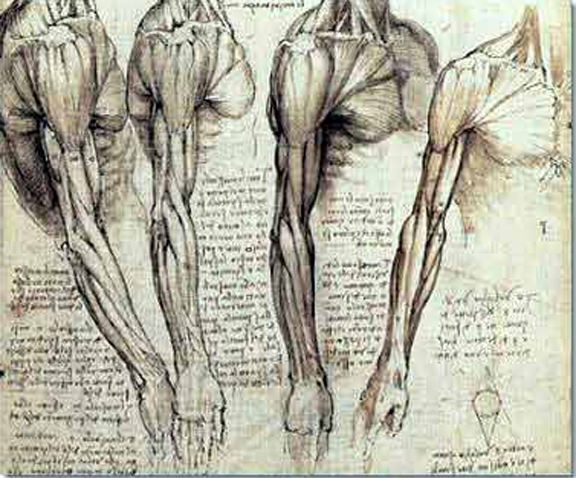
Continuing the Science in Art theme, I wanted to make sure to let you know about the Leonardo da Vinci exhibition which recently opened at The Queen’s Gallery, Buckingham palace, called the Anatomist.
Leonardo da Vinci is more famous for his Mona Lisa and is well known around the world as one of the great artists of the “Renaissance” period. However, not many know he was also a pioneer in the understanding of human anatomy. He intended to publish his work in a treatise on anatomy to add to European knowledge of the subject. However, he died in 1519 and the drawings remained amongst his private papers for almost 400 years. This exhibition is the largest ever of Leonard da Vinci’s studies of the human body and is among the Royal Collection’s greatest treasures.
It is definitely worth a visit, if only to admire the breadth of this mans gift and minds work. The gallery also present regular free exhibition talks at 12:00 and 15:00 on selected Fridays in May, June, July and September. The exhibition runs from 4th May- 7th October. Visit www.royalcollection.org.uk for further details or call 0207 766 7324. If you buy a ticket directly from them, you get FREE RE-ADMISSION FOR A YEAR. And if that is not enough to sway you and it should be, here are a few images to help you along. Remember, he had a books worth of work and these are not the cream of the crop. I’m just saying.
I keep apologising for the delay in my posts, so I am not going to do that again until I can somehow work out how to make the week longer or pause time during the day so I can catch up on my to-do list.
People say that Art and Science do not go together, I say they do and the next two posts are an attempt to high-light two well known artist who also say they do.
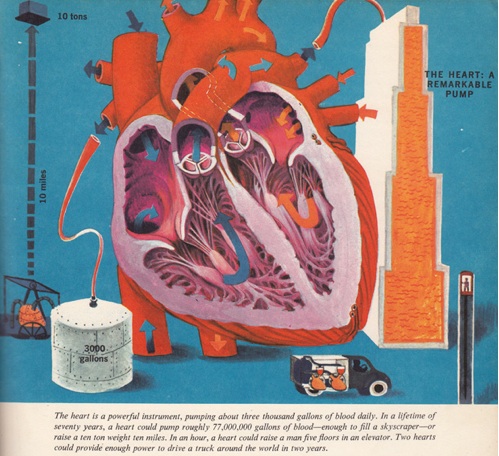
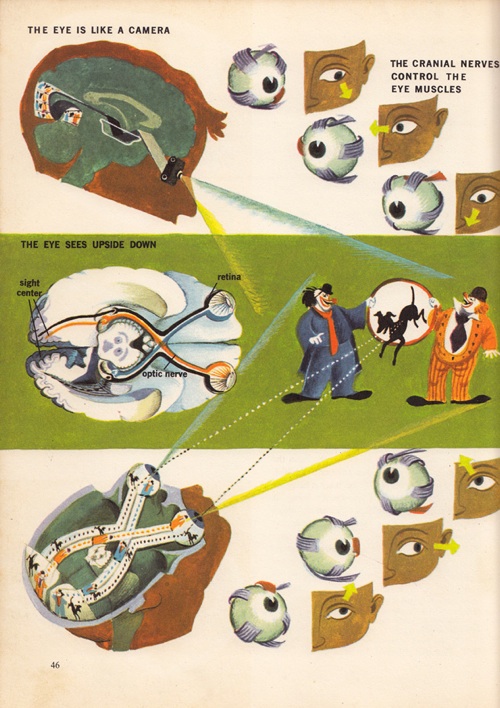
The Human Body: What It Is And How It Works is a stunning vintage anatomy book, depicting and explaining in more than 200 vibrant mid-century illustrations the inner workings of the body. Originally published in 1959, this colorful gem was inspired by German artist and researcher Fritz Kahn, who in his 1926 classic Man as Industrial Palacedescribed the human body as “the highest performance machine in the world” and used industrial metaphors to illustrate its remarkable capacities.
My favorite quote from the book is:
“Two hearts could provide enough energy to drive a truck around the world in two years.”
Last-night I had one of those life changing realisations and I couldn’t wait to share it with you all. For the past 6 months, I have been logging my often random monthly cycles with this handy I-phone app called M-Calender (one of the many reasons I am #teamiphone).
During what I thought was yet another bout of random insomnia, I tapped into the app at 4am and looked at my “symptoms” section. What I noticed actually made me get up and write this post in the middle of the night. I noticed that just before my period is about to start I have about two nights of insomnia. I noticed a pattern!! aaaaaaaargh I silently screamed, it all makes sense now.
The reason I am sharing this little piece of information with you is simple. I realised that instead of spending two nights tossing and turning in my bed trying to force my natural insomniac self to sleep during this pattern, I can simply use the 4 or 5 hours doing something productive. For example, catching up on my writing, admin and making those skype calls to all my friends across the pond. Light-bulb moment. Replace frustration with understanding and productivity 🙂
I learned so much about myself, some of the things I thought occurred, I was able to confirm by seeing the pattern (for example, my body temperature goes up around two days before and the newly-acquired moderate moodiness that accompanies it needs getting used to). The power of self-knowledge is amazing, I feel so much more in control of all those “in-controllable” symptoms just by knowing why and when they occur.
Ladies I wholeheartedly suggest you start logging your “symptoms” and help yourselves, your associates, husbands, partners, friends, family, flatmates…basically, all those who come into contact with you during that time of the month. I know a few of my girlfriends who I might just start logging alongside myself just to help me mediate their monthly life-crises.
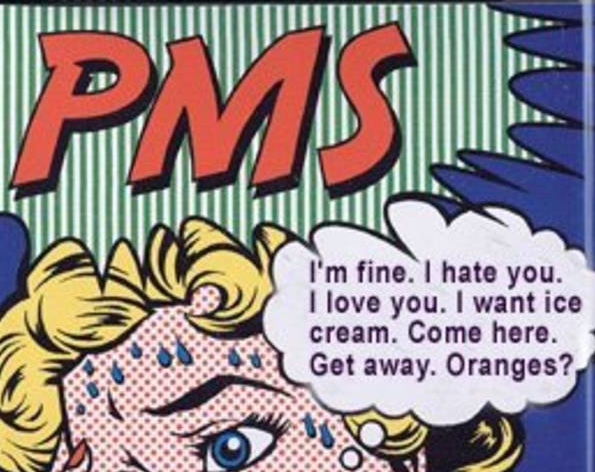
This is how I feel inside when I am going through this experience, however you would never know as I and many other ladies make a point of carrying it gracefully (if you are unfortunate enough to get excruciatingly bad cramps like I do, I know you feel me, they are almost as bad as the man Kelis is screaming at!)
Hope my geekformation proves to be useful and please let me know if it works for you.
This is short and sweet. I came across this video yesterday on Al-jazeera world news and wondered why we had not heard about it here in the UK and why it wasn’t on UK online news? or maybe I just missed it?
I decided that I am going to put this story on blast here. I mentioned before that my first ventures into the scientific world centered around Malaria and Mosquitoes. This is a short film featuring Aloe Blacc’s trip to Ghana in Spring 2012. Aloe joined forces with No MoreUK, a charity, to support Ghana’s goal to make sure every home in the country has access to a mosquito net by the end of 2012.
A very admirable and amazing feat. The same NEEDS to happen all over the world. Click on the video below and see how beautiful the smiles of the children he speaks with are. They made my heart melt and I donated a Starbucks Chai Tea Latte and Muffin worth. Click on the hyperlink and show your support Ghana and the UK, if only one more Kid gets a net, it is one more kid who has a better chance of not falling ill to Malaria. Surely that’s better than nothing.
Hope you are all well. Due to popular demand from my out-of-the-closet geeks, I promised a while back that I would add a new category which would deal with the major scientific theories and here it is.
Now, because I am a genetic and molecular biology specialist by training, I think you will all forgive me if I indulge in my area of expertise to begin with :-). And I hope you will understand why.
Yesterday, the world was introduced to one of the biggest new developments in the world of genetics since the Human Genome Project. Scientific researchers at the MRC Laboratory of Molecular Biology, in Cambridge, have developed chemical procedures that turn DNA and RNA, the molecular blueprints for all known life, into six alternative genetic polymers called XNAs.
I want you to take a moment and really take this in. It basically means that scientists have created artificial genetic material that can store information and evolve over generations in a similar way to DNA. WOAH. This is BIG. Not only is this expected to open up new doors for researching medicines and systems in biotechnology to fight major diseases such as cancer and hereditary disfunctions, but it provides a real tool that could enable scientists to make new novel forms of life in the lab. All the science fiction lovers must be silently whispering “I told you so”.
Here comes the Hard-Core Science. The process swaps the deoxyribose and ribose (the “d” and “r” in DNA and RNA) for other molecules. It was found the XNAs could form a double helix with DNA and were more stable than natural genetic material. More importantly, the XNAs are shown to be able to stick to a protein, an ability that might mean the polymers (protein “strings”) could be deployed as drugs working like antibodies (the things that fight disease in our bodies).
Further, Vitor Pinheiro, a co-author on the paper, said the research could help scientists work out how DNA and RNA became so crucial in the evolution of life, and perhaps even help in the search for extraterrestrial organisms. “If a genetic system doesn’t have to be based on DNA and RNA, what then do you define as life? How do you look for life?” he is quoted as saying.
This sounds crazy right? but other scientists, including Craig Venters team, who are the “oracles” of the genetics world are hoping to make synthetic organisms from scratch! However, the majority of the work so far has used conventional DNA. Which leads me to the ethical and religious arguments that I am sure will follow this paper. As a spiritual/religious person I have had the creation discussion many times before and some believe that as a Muslim I should not be messing with DNA etc etc. I disagree. It is not that simple. However, this far outweighs just religion, as a human, how far do you think we should go in-order to further science, medicine and technology? Click on this link to read the full abstract and get the article from the journal Science.
The Avengers movie is out, it all seems a bit more likely now….I will leave you to ponder
–
Let me know what you think? how does this discovery make you feel? Please share, re-post, re-blog, tweet this post if you enjoyed reading it.
Hope you are all having a great week so far. I was having a discussion with my sister the other day whom I believe is actually addicted to the Coca-Cola soft-drink. I thought everyone knew the story behind Coca-Cola and it’s “success” or “rise” but apparently not, so I decided to write this post and wet your appetite for random bits of geeky information (geekformation) that I tend to collect in my already cluttered brain 🙂
Coca-Cola is one of the most well known and wealthiest companies in the world. However, the company has a very interesting narrative. Coca-Cola was started by John Pemberton during a short lived prohibition on the sale of alcohol in Atlanta. Pemberton sought an alternative to alcohol, so he made a tonic that contained carbonated water, kola nut extracts, fruit flavors, and coca leaves. Brilliant idea. Here comes the crazy part; cocaine from the coca leaves was included in the drink, which is why it caught on so fast! Once this was realised by the Drugs Enforcement Administration (DEA) it was made illegal and the government limited the usage of the leaves. Not the greatest of starts right?
Then the story goes that no more cocaine was in the drink, yet the flavor was still necessary and had to be obtained from the coca.Therefore, Coca-Cola continued to use coca leaves. It was not until later when the US government completely banned any importation of coca leaves into the country that Coca-Cola was really in trouble. Because the procurement of coca leaves was illegal, Coca-Cola no longer had their key flavor. Now what are they going to do?
Of-course, money talks and Coca-Cola struck a deal with the DEA allowing them to continue to import the leaves, but ensuring the cocaine was removed. This is still the practice.The leaves are imported from Peru and Bolivia and DEA officers “watch closely” to make sure all the cocaine is removed from the leaves sent to Coca-Cola factories to be made into cola! Not think off how big Coca-cola is around the world and think of how much cocaine uhm I mean coca leaves are needed for total production. Crazy right? Peru and Bolivia…are they rich countries? hmmmm I wonder….
RIP Amy
–
Hope you enjoyed the random but true fact. Until next-time. Share the knowledge please.







 Faith In Geeks